 Lange Leidsedwarsstraat 94 1017 NM AMSTERDAM.


Curiosity is rewarded in Amsterdam. Each bend of canal, silent courtyard and bustling square has been the site of a story decades or centuries in the making — a tale filled with faith, art, commerce, fortitude and exchange. Medieval churches and royal palaces, world-renowned Amsterdam museum A-listers, cutting-edge art galleries, innovative design shops… the Dutch capital offers the ultimate historical and cultural heritage experience with culture vulture attractions within a walkable city centre which is friendly to pedestrians.
For tourists, navigating Amsterdam isn’t just about checking off landmarks. It's about soaking up history, considering impactful moments of the past and inhaling creativity in all its guises. After hours wandering its churches, galleries and historic neighbourhoods, the tempo inevitably slows. It’s the kind of food that feels nourishing and thoughtful, but in a city makes you want to stop and sit for a moment — until this city does indeed invite you to slide into a bright yellow banquette, or tuck yourself behind one of the restaurant’s lace curtains and break bread.
Just steps from the cultural throb of Leidseplein, Royal Thai Restaurant finds a comfortable resonance with that rhythm. It provides a soothing, stylish room to decompress after a day’s worth of incoming sensations, which doesn’t provide imbalance — the flavours and service are studied in their intention not to overwhelm with anything but soul.
This promenade through the history of Amsterdam is most meaningful when it culminates with time to rest and recharge, and consider. Combine the city’s historical depth with a carefully crafted dinner, and you feel as if you have had a whole experience in one night—one that echoes well beyond your last bite or drink and sticks with you long after day is done.

Amsterdam’s Sacred Roots: Churches and Spiritual Heritage
It is within the bricks and glass and crooked chimneys of Amsterdam’s architecture that its spiritual history is ghosted. Well before the city became famous as a hub of commerce, thought, and the making of art, it emerged from places of worship that grounded community life and moral order. Today, these churches still exist as living monuments — places where history, faith and culture overlap.
Central to the old city is Oude Kerk, Amsterdam's oldest building. This Gothic landmark, which dates to the early 13th century, has survived the fires of reformations and social progress. Inside, the large open space is spanned by a centuries-old wooden roof, and gravestones are embedded in the floor of the chancel — a direct link to medieval Amsterdam. The location of the church — surrounded by narrow streets and canals — emphasizes just how closely faith and daily life were once interwoven.
A short stroll away, the placid Begijnhof is one of the city’s most tranquil secret precincts. This closed courtyard, sheltered from the bustle outside, housed the Beguines — religious women who lived together in a sort of commune without taking a vow of poverty. In its center, the small Begijnhof Chapel underscores a mild piety and is an emblematic tribute to Amsterdam’s centuries of tolerance between religions.
Close by, the Engels Reformed Church is emblematic of Amsterdam’s international flavour. Established to serve English-speaking Protestant communities, it is a testament to the city’s long history as a refuge for migrants, businessmen and thinkers escaping religious persecution elsewhere in Europe.
Heading west, the skyline is marked by the graceful Westerkerk and its slender tower. Inextricably linked to the Dutch Golden Age and situated close to Anne Frank’s House, it is both a cultural and historical treasure. At the top of the tower, visitors are treated to sweeping views over canals and rooftops — a visual reference for the equilibrium between grandeur and human scale that characterizes Amsterdam.
Other holy sites enhance this spiritually charged space. De Nieuwe Kerk, next to Dam Square, has been the site of royal ceremonies and national events for centuries. Zuiderkerk mirrors the influence of the Renaissance and civic life in the eastern part of town. On the other hand, the sumptuously dressed up De Krijtberg Church is a pearl in terms of its interior, and it’s pretty much what you’d expect from afar to be so different from the subdued Protestant churches.
Together, the chapels narrate a layered story of faith, tolerance and artistic expression. Discovering them offers not just architectural history but also a glimpse of how a strand of spirituality helped form Amsterdam’s identity — quietly, insistently, in sync with the tuning fork of the city’s cultural life.

Power, Public Life, and Royal Grandeur
Religion and royalty both have a long history of moulding Amsterdam’s civic identity, determining the way in which the city governed itself, gathered its citizens together, and projected authority beyond its borders. It is perhaps most evident in Dam Square, the city’s biggest and most emblematic public space. Dam Square has long been the city’s political, commercial and social center. Markets used to run here alongside official proclamations, public punishments, festivals and parades. Today, too, the square pulsates—this time from street performers, ceremonies, tourists and people carrying out their daily routines—displaying a continuing role of public space in forming civic identity.
At the side of the square is the grand Royal Palace Amsterdam, a structure that demonstrates how self-assured the city was during its peak in the Dutch Golden Age. Built as a city hall rather than a royal palace in the 17th century, it was meant to symbolize the power of Amsterdam’s citizens and merchants, not a monarchy. Its grand scale, symmetry and classical design were meant to project authority, stability and order — qualities any global trading city was going to need. After the building was later transformed into a royal palace, that meaning shifted, piling monarchical symbolism atop an edifice that had originally sprouted from civic pride. Inside, marble halls and allegorical sculpture showcase how notions of governance and global trade were brought into Carlylean perspective in the service of royal ambition.
Dam Square also serves as a vestibule between one era and another. High-profile national events, ceremonies and public gatherings still occur here, proving that Amsterdam’s centre is not a museum but still very much an active stage for civic life. This notion of continuity reaches outside the square and into neighbouring districts, where public spaces continue to drive socialization and cultural exchange.
Outside Dam Square, life in the Dutch capital play out at a more leisurely pace; you can take a stroll through one of the famous open-air markets or visit a cozy cafe (take it easy and try the local brew). The Spui has a long academic and cultural history. Renowned for its book markets, historic cafés and proximity to universities and theatres, Spui has always drawn writers, students and thinkers: a tradition of dialogue and contemplation that stretches back through the centuries. Rembrandtplein, by comparison, reflects the city’s more social and party-oriented face. Originally a humble square, it has grown into a bustling hub for cafes and music venues where nightlife flourishes—showcasing how historical spots accommodate new beats without losing their original flavour.
The common denominator of those squares is continuity. They reveal that the history of Amsterdam is not confined to museums and monuments, but lives on in everyday practises – walking across a square, gathering with friends, discussing ideas or marking milestones. And after exploring these former powerhouses and places of public life, it also feels right to escape the crowd – and slow things down a bit. Ending the day around here at this restaurant is a quieter counterpoint to the city’s grandeur and energy, a chance to meditate on Amsterdam’s royal past and bustling present in peaceful surroundings, putting some balance back into a day filled with history, power and public life.
Masterpieces of Art Around Museumplein
Amsterdam’s reputation as a global cultural hub is closely entwined with its museums, especially the ones huddled around Museumplein. An open cultural square, where several of the most important art institutions in Europe are close by, enabling us to experience different centuries of artistic expression within one day without the need to change our shoes.
In the middle is the Rijksmuseum, the huge museum that displays much of Dutch history and culture. Its extensive holdings tell the history of the Netherlands in painting, decorative arts and historical objects. A selection of world-famous pieces from the Rembrandt House Museum and Vermeer are the centrepieces of the experience, drawing fascinating parallels between art and life in the Dutch Golden Age, including a lens of historical events that influenced art during this period.
A short walk away, the Van Gogh Museum turns from national historical pride to the private realm of emotion and artistic struggle. The museum presents a rare behind-the-scenes view of the life and work of Vincent van Gogh through more than 200 paintings, drawings and letters. The evolution of his work, ranging from dark and early compositions to stunning masterpieces, leaves an indelible impression on a visitor, both emotional and intellectual.
The core trio is rounded off by Stedelijk Museum, a striking contrast to its more classical neighbours. Its focus is on modern and contemporary collections, with big-name Dutch masters exploring movements like De Stijl, Bauhaus and abstract expressionism as well as design at the cutting edge, including experimental art that reflects changing cultural mores.
Bringing a modern edge to the area, you will find the Moco Museum. On a smaller scale, but with big ideas, Moco presents exhibitions that are also focused on street art, pop culture and modern icons, certainly challenging long-held assumptions as to what’s museum-worthy.
Between them, they make Museumplein more than a destination: it becomes a handy shortcut across the history of art. From masterpieces of the classical canon to deeply personal expressions and provocative modern creations, this region captures the sweep of Amsterdam’s cultural nexus in a closely linked series.
Jewish Heritage and the Memory of WWII
Its Jewish heritage ranks among the deepest and morally the most important of Amsterdam’s historical layers, one that is best contemplated in silence as opposed to being stared at. These spaces do not testify to grandeur, but to life as it has been lived — century upon century of community, cultural contribution, intellectual exchange, persecution and survival. Located mostly in and around the former Jewish Quarter, they demonstrate how profoundly Jewish history is threaded through Amsterdam’s identity before the city suffered during the Second World War. The pace of walking through these neighbourhoods is consciously slower, more meditative — not just in order to turn away from architectural spectacle but toward memory, empathy and moral accountability.
At the emotional heart of this setting is the Anne Frank House, one of the most visited historic homes in the world. Tastefully and minimally preserved, the house does not act as a stage for drama; it lets the space speak. To stand inside the Secret Annex, where Anne Frank wrote her diary, is to make history real as no abstraction can. The cramped spaces, hidden entrance, and partially preserved fragments of the original diary bring the fearsome daily regimen, tamping down voices and hopes of resistance within hiding persons’ hearts, vividly to life for you. The effect is deeply personal and often lingers long after the visit has taken place, as it links global history to an individual voice.
Institutions around it expand this view of the single story. The Jewish Museum and the Jewish Historical Museum showcase Jewish life in the Netherlands over 400 years, featuring religious traditions, family stories, art, and daily culture. Nearby, the Portuguese Synagogue is a potent symbol of an earlier time, when the city was home to successful scholars and worldlier Sephardic Jews who found haven in Amsterdam. And rounding off this landscape of memory, we find ourselves again in remembrance through the National Holocaust Museum and the Hollandsche Schouwburg, never theoretical or remote but always embedded. Together, they make up a dignified and necessary trip – one that roots Amsterdam’s permissive reputation in the lasting responsibility of memory and historical accountability.
Canal Houses, Photography, and Merchant Life
The canals of Amsterdam don’t exist simply to provide picture-postcard backdrops for tourists, and they aren’t just a charming architectural heritage feature: They are the city’s structural skeleton, the basis on which it managed to become a global trading power. A product of the Dutch Golden Age, the canal belt served as an economic driver by facilitating easy transport, limiting the city's expansion and maximizing merchant wealth. The graceful gables that front the canals proved further that they weren’t just pretty houses, but practical, symbolic representations of power and trade as part of a disciplined plan for urban development. Nowadays, the majority of these oldest houses are used as museum buildings, and you can walk right into the world of Amsterdam’s merchant elite.
One good introduction to the system is at the Museum of the Canals, depicting with some visual flair how it was engineered and developed, then operated with extreme efficiency. With interactive displays and historical models, the museum explains why this infrastructure achieved status as a UNESCO World Heritage site and how it impacted daily life, trade routes and social hierarchy. And just around the corner, the Van Loon Museum presents a more intimate view. Located within a preserved merchant’s house, it offers insight into how affluent families lived, worked and entertained, with period furniture, formal rooms and even a private garden behind the canal-side façade.
The canals are also a spectacular backdrop for visual culture. Further still, institutions such as Foam Photography Museum and Huis Marseille meld centuries-old buildings with photography of the present day. Their shows also utilize imagery to investigate global histories, personal stories and social transformation, whilst opening up a dialogue between old merchant environments and contemporary interpretations. Having spent the day wandering through these canal houses — soaking up tales of trade, art and domestic life — it seems only right to take things down a notch. Winding up the experience nearby at this royal restaurant offers a civilized rest, as visitors can ponder Amsterdam’s merchant past while they sample the city’s present-day sophistication in relatively serene surroundings.
Innovation, Science, and Contemporary Culture
The cultural story of Amsterdam isn’t finished with its historic canals and Golden Age masterpieces. Lisbon is a city that reinvents itself, and the new generation of museums has an outward-looking attitude, creative experimentation and international focus. Rather than serving as repositories of the past, these places are more interested in dissecting how science, technology, media and culture affect life today. This way, they show Amsterdam as a city that’s active in the future and not just celebrating history.
The Nemo Science Museum, with its ship-shaped design looming over the eastern docks, is a perfect example of the approach. Interactive and approachable by wholesalers, NEMO invites children and adults to touch science with their hands around the corner. It presents subjects including energy, physics, technology and the human body in a hands-on way that will reinforce Amsterdam’s historical connection with curiosity, engineering and problem-solving. The Eye Filmmuseum on the water’s other side is a more demure point in innovation: It’s dedicated to the art of cinema, and its tech. Its dramatic architecture symbolizes its mission: to investigate film as a cultural artifact and a living medium, through exhibitions and screenings, with retrospectives.

Taking this tendency even further, the Nxt Museum centers around digital art and immersive (multisensory) technology. With light, sound, data, and interactive installations, it defies definitions of art or form, as well as traditional ways to contemplate them, involving visitors in it instead of letting them be mere observers. And juxtaposed to this contemporary approach, the Tropenmuseum zooms out globally. It links innovation to social understanding and historical context, presenting exhibitions on culture, migration and shared human stories. Taken together, both of these institutions exemplify Amsterdam’s ability to straddle scientific progress and creative experimentation with cultural reflection — firmly placing itself in the present to confidently map out what comes next.
Theatre, Gardens, and Cultural Neighbourhoods
As the evening hours loom, Amsterdam's cultural pulse slows and deepens; quietness takes over from a day of discovery; ideas and stories unfold into performances; conversation drifts into reflective spaces. This transition is most apparent in the city’s theatres and gardens, where art and amusements merge on a smaller scale. In Amsterdam, evenings are not just about a night out on the town but about narrative sharing, live performance and slow moments spent in well-designed public spaces that invite contemplation and presence.
At the center of this evening activity is the Royal Theatre Carré, featuring some of the city’s most glamorous shows. The theatre has been situated on the banks of the Amstel River for centuries and hosts everything from traditional opera and ballet to modern theatre shows, concerts and international productions. With its sumptuous interior and historical significance, attending a performance here is as much about the atmosphere as it is about the show. Just down the block, Artis Gardens is a different story. One of the oldest zoos in Europe, Artis offers a surprisingly peaceful respite, with its winding paths and historic buildings serving as an oasis within the city — especially during the softer light at dusk or early evening.
This mix of culture and peace pervades the De Plantage Neighbourhood, an enclave marked by wide boulevards, green spaces and a density of cultural institutions. De Plantage has none of the bustle of central districts and instead feels wide open and residential in character, but it is still very much seeped in Amsterdam’s intellectual and artistic life. Mezrab Cultural Center maintains the practice of oral storytelling and live spoken-word, while Kriterion Cinema screens independent and international films within a context developed through student-led cultural participation. All together, these theatres, gardens and neighbourhood spaces tell another story about Amsterdam: One that is not of splashy grandeur but of the continuum and sustained creativity, contemplative design, and a deep sense of cultural connection.
Ending the Day with a Relaxing Dining Experience
After a day of hiking along picturesque canals, ambling from museum to museum, absorbing the emotional and intellectual gravity of the cultural monuments in Amsterdam, it’s only natural for the body to desire repose and rejuvenation. Everything is in motion : a narrow lane, galleries, pavements or squares and moments of reflection define the rhythm of the day by night. Here, dining is no longer about the practical and functional need for food or a time-out to eat. It becomes a threshold, demarcating the change from seeing to ceasing to move, looking to quiet contemplation. The right dinner also helps to let all the impressions of the day sift down and lets both body and spirit stretch out and reset.
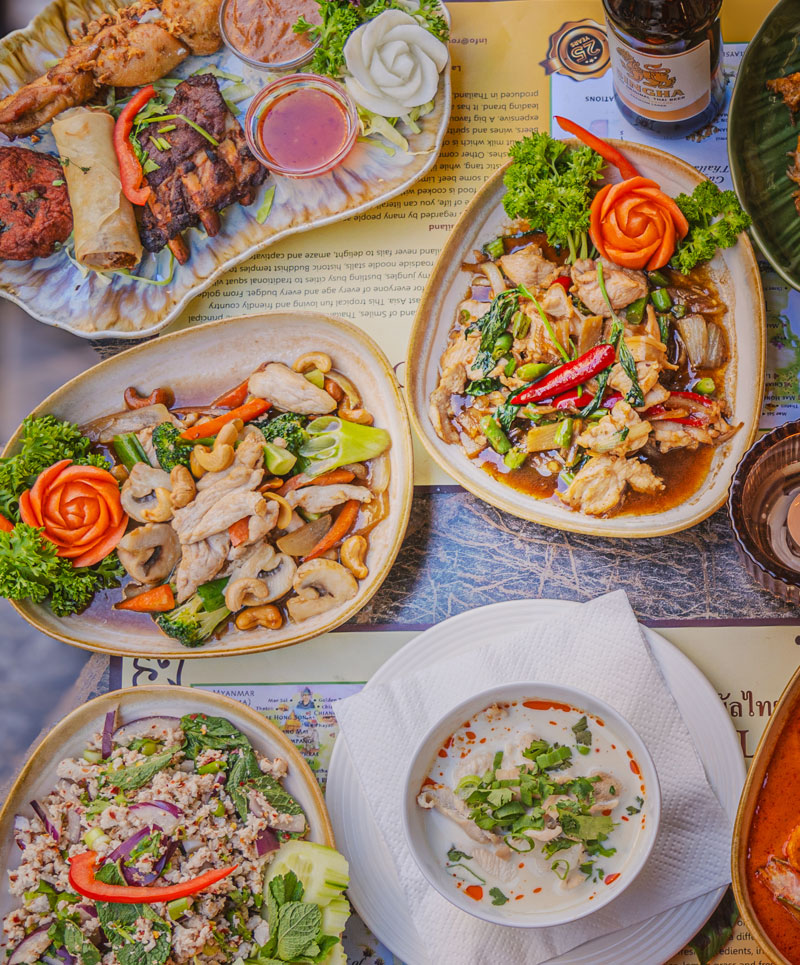
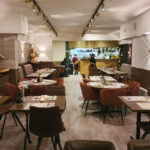
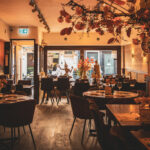
Royal Thai Restaurant, which can be found at Lange Leidsedwarsstraat 94, 1017 NM Amsterdam, is such a place. It is perfectly located close to Leidseplein and at the heart of the city’s cultural scene, but when you step inside, it feels like you are in a place entirely removed from the bustle outside. The location is peaceful and welcoming, with guests able to escape the crowds without leaving the heart of Amsterdam. Considerate design features, non-intrusive and obliging service, and a sense of calm in the entire space make it an ideal place to relax after a long day of sightseeing.
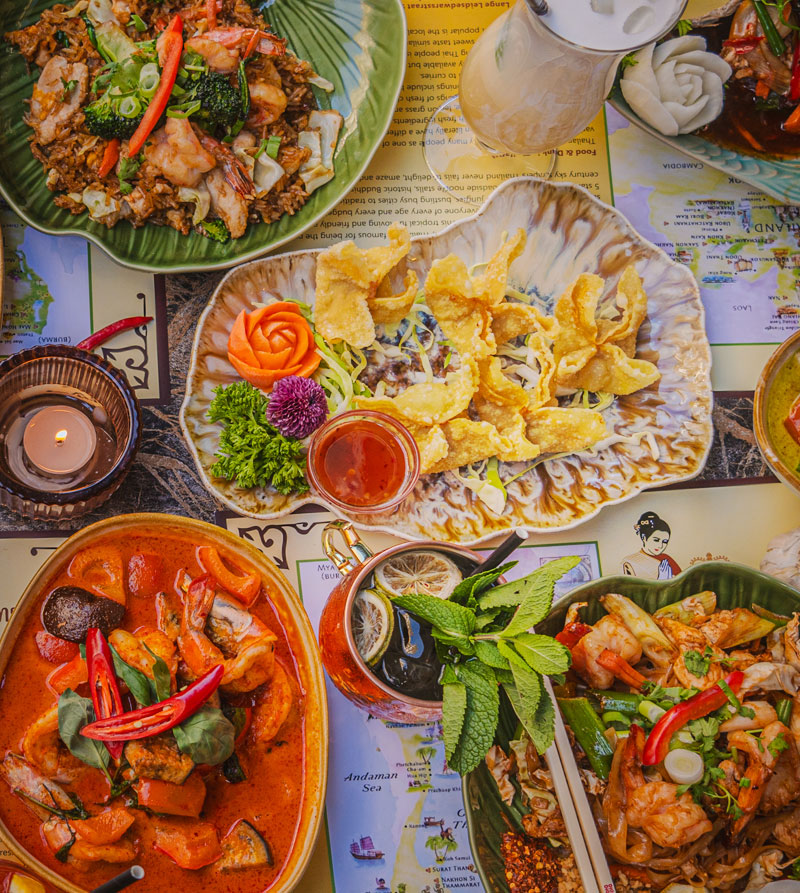
The way of eating rises to that feeling of restoration as well. Contemplatively executed Thai dishes are put forth with equilibrium, flavour depth, and holding back in mind. The food is strongly spiced, if not too much so; it is meant to comfort rather than titillate after a long day of sensory overload in areas like the De Plantage Neighbourhood and other cultural quarters of town. Courses are not rushed, and guests are coaxed to sit back and take their time. This juxtaposition, the busy intensity of day and a restful tempo for the evening meal, contributes to an overall feeling of resolution that feels right, mingling on its own with everything Amsterdam has left me.
For visitors and residents, calling it a day here doesn’t feel like a desperate act that is the product of circumstance. It adds a finale to an exhaustive programme of discovery that may have taken in art, history, spiritual contemplation and neighbourhood exploration. A casual dinner is the final scene in the day’s story, bringing experience and emotion into a setting that values comfort and concern. In the process,s it rounds out an Amsterdam experience — bringing energy back, memories of the day slowly, without being forced and rushed for hours to come.
A Complete Amsterdam Experience
It is not a city meant to be rushed. Its rhythm inspires mindfulness — churches that encourage contemplation, museums that reward curiosity, canals that slow the gait of walking and neighbourhoods that show their greatest charm only when one walks without haste. Every layer of the city adds to a larger narrative, where history, creativity, tolerance and daily life rub shoulders. What experiencing Amsterdam to the max comes down to is giving those elements time and not rushing them as if they were standalone attractions.
What makes this a journey is balance. Days of exploration, from sacred spaces to galleries, historic streets to cultural districts, will be enriched by a quiet and deliberate end. Relocating to a laid-back, dining vertigo closes the day and lets it all sink in before retiring. It makes room to process what has seen and felt and learned, turning a lineup of activities into an enduring experience instead of a bucket list of sights.
Ending the day at Royal Thai Restaurant near Amsterdam’s cultural heart makes that balance come into focus. A warm meal in a friendly environment results in the day’s wonders being closer, smudging physical rest with mental confidence. Discovering this side of Amsterdam’s past and concluding the trip in this way is a lot more than an itinerary — it is, in fact, a way to experience the city with purpose, meaning, and real memorability.
Recent Post
-
1

-
2
 A Perfect Day Around Amsterdam’s Central Hotels and City Sights
February 10, 2026
-
3
 A Scenic Canal Route Through Amsterdam Followed by Dinner
February 10, 2026
-
4
 Amsterdam’s Cultural Landmarks and the Ideal Way to End the Day
February 10, 2026
-
5

-
6

-
7
 Drop By Our Authentic Thai Restaurant in Leidseplein
June 13, 2024
-
8
 Explore Leidseplein Top Attractions and Famous Places to Visit
December 26, 2025
-
9
 Exploring Amsterdam’s Parks and Ending the Day with Great Food
February 9, 2026
-
10

-
11
 Lange Leidsedwarsstraat: A Complete Guide to Amsterdam’s Lively Streets
February 26, 2026
-
12

-
13
 Shopping Amsterdam’s Iconic Streets Before a Relaxed Dinner
February 9, 2026
-
14
 Strolling Through Amsterdam’s Squares and the Ideal Evening Meal
February 10, 2026
-
15
 Taste The Flavorsome Thai Rode Curry in Amsterdam
June 13, 2024
-
16

-
17
 Try Authentic Thai Food Amsterdam Only at Royal Thai
June 13, 2024
-
18

-
19
 Walking Amsterdam’s Famous Streets and a Relaxing Evening Meal
February 10, 2026
-
20
 Your Guide to a Good Thai Restaurant in Amsterdam
June 13, 2024
