 Lange Leidsedwarsstraat 94 1017 NM AMSTERDAM.


Amsterdam is a water city. Long before it had walkable streets and tightly knitted neighbourhoods, canals determined how people moved, traded, lived on and understood the world. But these canals were not ornamental flourishes: they were the city’s first infrastructure. Today, as tourists and residents hop between bridges and quays, canals still hold the tableau of daily life — quietly but firmly shaping movement while dictating the rhythm of the city. It’s in this meditative pace that experiences like dining at Royal Thai Restaurant feel particularly apt: well-paced, grounded and deeply rooted in the flow of the day.
Whereas in many cities rivers are borders, Amsterdam’s canals are connective tissue. They connect neighbourhoods rather than separate them, transporting architectural history from one area to another. Canal houses slouch with age, warehouses have relaxed into homes and cafés, and bridges signal gentle crossings rather than abrupt boundaries. Strolling along the water, there is a more intimate and detailed version of the city — the one boats frequently speed through. You observe reflections quivering in the tall windows, houseboats that people live in and do not just take photographs of, bicycles leaned casually against iron railings and changes in sound and light as one canal gives onto another.
A full day walking along Amsterdam’s canals is immersive without being exhausting. It unfolds at a human pace: pauses at corners, spur-of-the-moment detours, moments of stillness in which the water appears to carry out the sky. The morning light crisps the façades, the afternoons blur into animation and conversation, and by evening, the canals go quiet, almost pensive. It’s an approach to the city that feels organic rather than curated — scenic versus overwhelming, active as opposed to overly hurried.
As the day comes to an end, even the canals themselves hint at what is in store. After hours of walking, observing and soaking up, the body seeks respite, the mind something to fix it to. Evening in Amsterdam is more about milieu, less about spectacle — a place where what’s on the plate melds with a relaxed ambience, and you can look back over the day quietly. In that way, well-considered dinner is part of the journey: not an interruption to the canal-led experience, but a lengthening or broadening or shaping of it — a moment for one’s impressions to slow and deepen and finally find rest.
Amsterdam Through Its Waterways
Amsterdam’s canals were never aesthetic objects. From their inception, they were multifunctional, being used to support trade and strengthen city defences, but also serving other ends, from facilitating residential expansion to regulating water levels in the low-lying landscape. This layered functionality is exactly why the canal system feels so essential to the city, rather than decorative. Over millennia, an ordered system of practical infrastructure has been transformed into one of the most recognizable and cohesive urban landscapes in the world; a place where engineering and architecture are still woven into the texture of daily life.
When walking a canal route, you are seeing an entirely different Amsterdam than if you were to traverse Amsterdam by its streets or by the headline landmarks. Streets can break the spell, drawing attention from one place to the next. The canals, in contrast, create a connection. Bridges will be crossed, neighbourhoods subtly alter and architectural idiom changes from medieval to classical to modern . To our amazement, the water is constant. This has an unbroken continuity of presence, and makes a sense of flow that lets you see how the city connects to itself as opposed to how it is disconnected into attractions.
For the first-time visitor, canal walking provides clarity in particular. Instead of checking off museums or squares, you explore Amsterdam as a living organism — one that lays bare how commerce, housing, public space and movement can live hand in hand. The canals reveal how people have historically arrived at the city, where the goods were stored, how wealth has moulded façades, and then quieter life just beyond their densest centers. Each body of water has a slightly different history, but they all belong to one story.
A picturesque canal route is always revealing itself gradually. It often starts with Amsterdam’s oldest waterways, the narrow canals and closely clustered buildings that trace the city’s earliest expansion. From there, it branches out into the wider canal rings where symmetry and greenness and softer residential rhythms predominate. Finally, the atmosphere grows more muted around quieter edges — less traffic, more trees, longer reflections in water. This gentle progression makes the walking around Panama’s canals feel natural, never forced — you get an all-encompassing picture of the city, without ever feeling like there is too much or your time is running out.


The Oldest Canal Routes: Where Amsterdam Began
The story starts with Singel, once the medieval moat that marked the outer boundary of the city. It set the boundaries between what was Inside and what lay outside long before Amsterdam much later expanded into its renowned canal rings. It now provides a laid-back and earthy touchstone to walking along canals — central without being frantic, historic without feeling preserved. Book stalls run beneath the trees along its curve, narrow houseboats rest quietly at the water’s edge and small bridges link streets that still operate in much the same way they have for hundreds of years. It’s a stretch that one should savour slowly, preferably in the morning when the city appears settled and unforced.
A short walk away, Zwanenburgwal is an altogether different mood. This canal cuts through terrain that was once the haunt of artists, intellectuals and merchants, for whom the medieval city is suffused with significance. The waterway is narrower, the buildings more in your face, the ambiance more of an insider’s game. Rembrandt was a neighbour, and though the environs have been transformed, the canal has lost none of its meditative calm. There is something less observational and more reflective about walking here, as if for a moment the city directs its attention inward.
At the periphery of this early canal zone is Sint Antoniesluis, a point where several canals meet, and the city’s combinatorial waterways appear less accidental. This is no mere crossing but an object lesson in how carefully Amsterdam was engineered. Standing here, it’s not hard to believe that at one time water levels were carefully controlled — with sluice gates controlling flow, protecting neighbourhoods from flooding and keeping trade loose. There is a real sense of transition about the intersection, and an end as well asa beginning within the canal system.
These oldest river pathways signal the tone for everything that comes after. They’re not grand or showy, but they are vital. Moderation, equilibrium and pragmatism are the defining terms of Amsterdam’s relationship to water from the get-go. Before the city becomes wider, greener or more monumental, it starts here — quietly, purposefully and with water as its heart.
The Golden Age Canal Belt
And no canalway tour of Amsterdam is complete without the grand loop that has helped shape a global city’s image. This is the canal belt, where planning and wealth came together in a vision that would shape an urban layout still recognizable today. Right now, I'm just walking here — and by that I mean not simply moving through a space but experiencing an environment shaped for effect to project orderliness, confidence and long-range prosperity.
The whole place seems ordered, almost calibrated, side to side on Herengracht, Keizersgracht and Prinsengracht. Constructed in the 17th century, when Amsterdam was flush with cash and opportunity, these waterways served as a statement of economic power and civic pride. Their geometric layout, their size and their architectural integrity testify to a time when Amsterdam was asserting itself as a global trading centre and cultural power.
The most stately of the three is Herengracht. Its homes along the grand canal are formal, with severe-looking façades and an almost austere elegance that telegraphs status as well as stability. (Most of these buildings were commissioned by some wealthy merchant or other, and their gargantuan proportions still advertise that history.) Keizersgracht, wider and more open, brings in a feeling of openness. The long sightlines across the water in turn encourage slower, more purposeful walks, unveiling the canal’s scale and sentimentally returning cross-props to their central role of pondering your conveyances on the horizon. Prinsengracht, instead, feels alive and well-used. Houseboats crowd the banks, cafés seep onto the street, and everyday life proceeds along the water with a warmer, more human rhythm.
Connecting these two main waterways is Leidsegracht, a cross-canal known for providing some of the most striking views in the city. From its bridges, the canal belt’s composition comes into focus: the serial arches, rooflines stacked up like sandwich layers, and reflections mirroring the architecture out onto the water. These instances of visual symmetries stop you rather than make you move on, forcing the realization that this city was so carefully planned.
This part of the walk is extremely immersive. With no intentional pause, visitors slow down—match their stride to the cadence of water and repetitiveness of façades. The Golden Age canal belt does not shout for attention with spectacle; it absorbs that attention quietly, prompting you to see things in balance and with a sustained sense of calm.
Photogenic Corners and Iconic Views
Some canals of Amsterdam appeal to the lingerer rather than the mover. These are the stretches, after all, where walking naturally slows, not because of crowds or stopped pedestrians or physical impediments (well, there’s that too), but because the view itself demands you pay attention. Here, the city’s connection with water is most visually eloquent, which makes for moments that seem composed but unquestionably unforced.
Reguliersgracht is most famous for the iconic “Seven Bridges,” a stretch marked by seven arching bridges that line up single file across the canal. The effect is striking — not in a theatrical way. It’s a place where walkers will often stop and look instinctively at the alignment, then spend another moment after the picture has been taken. It’s a view that exposes Amsterdam as the city of layers: depth, repetition, and balance all at once in a hushed frame.
Brouwersgracht is no less loved, often called the prettiest canal in the city. More open and spacious than most of the others, it also comes with a different feeling of scale. Along the water, former warehouses, now residences -- that still look all blocks and fortitude. Boats linger lazily along the edges, and the width of the canal means it opens toward light and lingers as the day progresses, softening faades and reflections.
These canals typically indicate a more subtle pivot in direction on a longer walk. By now, the city does not seem strange or taxing. The second they become known, not in a repetitive way, but because now I have an understanding that's been thrust upon me. The lines seem natural, the vibe laid-back, and the tempo decidedly relaxed. It’s here where traversing the canals becomes less about exploration and more about transition, carrying yourself through Amsterdam in hushed calm.
Eastern Canals and Residential Calm
Heading east, the canal changes its character significantly. The dynamism of the central canal belt ebbs away and is replaced by common Amsterdam, a more tame, residential place that shows you another side of the city — a side with less glory but also less disruption.
The combination of Nieuwe Herengracht, Nieuwe Keizersgracht and Nieuwe Prinsengracht, which stretches the Golden Age style much further out, into where life's rhythm is more peaceful. Although the ratios and mirroring are still present, now they are different somehow. Trees skirt the water, benches dot it, and locals navigate by it not in haste but as a matter of course. These canals are lived in, sculpted by the everyday, not spectacle.
Nearby, Uilenburgergracht snakes through historic neighbourhoods that were once home to craft and trade. The canal is more like a dark alley, the buildings are closer, and the vibe is generally intimate. It has a kind of almost small-town quality, with moments of reflection and light charm.
Further, Wittenburgervaart and Van Noordtgracht provide traces of a more industrial history. Greater volumes of water, past docklands and recycled warehouses hint at trade, labour and movement – not wealth and show.
This eastern finality is good for reflecting. Crowds dissipate, sounds attenuate, and walking turns meditative — which is the best way to take in all the city slowly, without interruption.
Working Waterways and the City’s Maritime Side
Amsterdam’s canals weren’t just places to live beside — they were working thoroughfares that kept the city economically alive. Beyond the regal dwelling spots of the inner canals, a dirtier network indicates how commerce, labour and seafaring used to shape daily life.
Schippersgracht is an immediate reminder of that past. Its very name brings up ship's crews, loading ports and inshore navigation. The canal is direct and purposeful, surrounded not by buildings that were clearly designed to be seen and looked at, but ones that spread out like systems of storage and access and passage. Walk here, and the water reads less like scenery than like infrastructure.
Waalseilandsgracht is a similarly textured human playing field, venturing to former dock areas where goods were traded the length of ship-to-shore. The scale slightly grows, and it evokes the feeling of openness corresponding to its function as a connecting link between city canals and active harbour space in the days long gone.
By Westerdok, the city starts to broaden its horizon. Boats are bigger, sightlines longer, and the tempo of investment more rapid. Nearby, Westerkanaal and Westerkade sustain this open feeling: The paths are long and unbroken, with water and sky still dominating the view.
These canals are Amsterdam’s working heart — less polished, more exposed and extremely real. They reveal a city constructed not only to be beautiful, but to move and exchange goods on the water.
The Outer Ring and Former City Boundaries
As the walk traverses further out, the canals now start to delineate the physical boundaries of what was once Amsterdam. The beat of the city settles into a gentler pulse here. Movement becomes less linear, and the landscape begins to echo transition rather than density.
For centuries Singelgrachtwas the outer defence for the city. Walking along it today, one gets the clear feeling of a break between old Amsterdam and what grew up behind it. The canal is wider and more placid, bordered by greenery and open sightlines. It is easy to believe in the expanse of fields, gardens and open land beyond this water, the city once yielded. The canal doesn’t feel confining; it feels like a limit.
Other small canals are close by, such as Waterleliegracht and Smaragdgracht, which is definitely worth exploring. These canals are more restful and less visited, their whimsical names echoing in a sense of privacy. For those who walk without hurry, there are narrow paths, light foot traffic and gentle reflections. These are locations where, for a moment, the city becomes private.
It's that time of day when walking is less about getting places than just being there. The canals no longer steer you ahead — they urge you to stop and look around, and just stay.
Southern and Western Waterways
Further south and west, Amsterdam's network of canals starts to integrate more smoothly with parks and residential streets beyond the tight cluster of city streets. The density of the old centre deserves a little softening, which here is achieved via a space that feels both more open and more breathable, where water and greenery can keep an equal presence.
A very different Schinkel is evident from the inner canals. Linking the city to its hinterland in a larger, more organic corridor that doesn’t choke it off with a series of rings. The banks seem open, the flow less managed, and there is a wider view. Walking beside the Schinkel has the feeling of a release toward the outside, as if Amsterdam is gradually letting go.
Stadiongracht, which runs along beside it at points, is evidence of another era in city planning. Its straight lines, its generous width and its structured arrangement counteract the organic curves of old canals. The environment is modern and ordered; an arena of design decisions that foreground space, light and domestic equipoise as opposed to trade or defence.
Out here, Slotervaart and Smallepadsgracht just took me in a direction further from the center, into some less hectic terrain. These are not crowded routes, but they possess enough atmosphere and sense of space to feel like long, uninterrupted lanes for contemplative walking.
Here, the city feels a world away — peaceful and slow, even though it is never really far off.
The Gradual Shift Toward Evening
Amsterdam looks subtly different as the day draws on. Light spills off the canals, reflections deepen, and the pace of footsteps becomes more unhurried. I hear voices speaking more softly, boats that glide soundlessly and the water that 24-hour door to adventure now appears to invite one to stay. The canals do not beckon movement; they indicate a pause.
A daylong canal walk is gratifying in a physical sense but also strangely mind-consuming. Hours watching architecture, neighbourhood transitions and the rhythms of life along the water bring on a quiet weariness — more one of fullness than fatigue. By the late afternoon, sitting down, talking and eating feel natural rather than scheduled. This is where Amsterdam excels. The city does not precipitate us from the active into the relaxed. Instead, it guides you slowly from motion to rest.
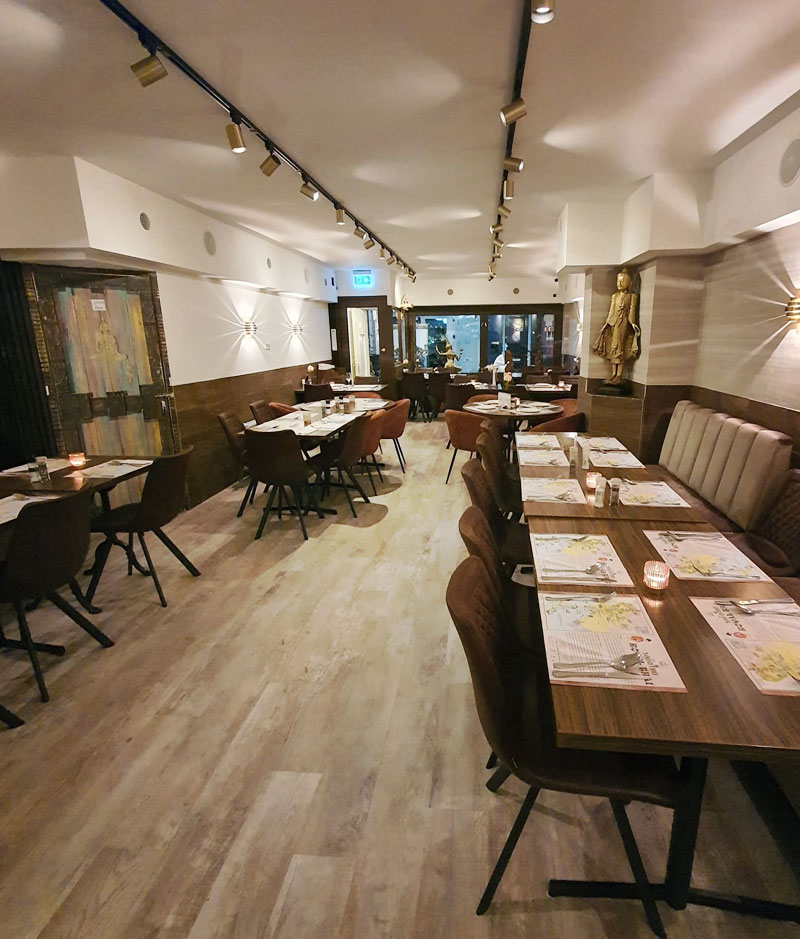
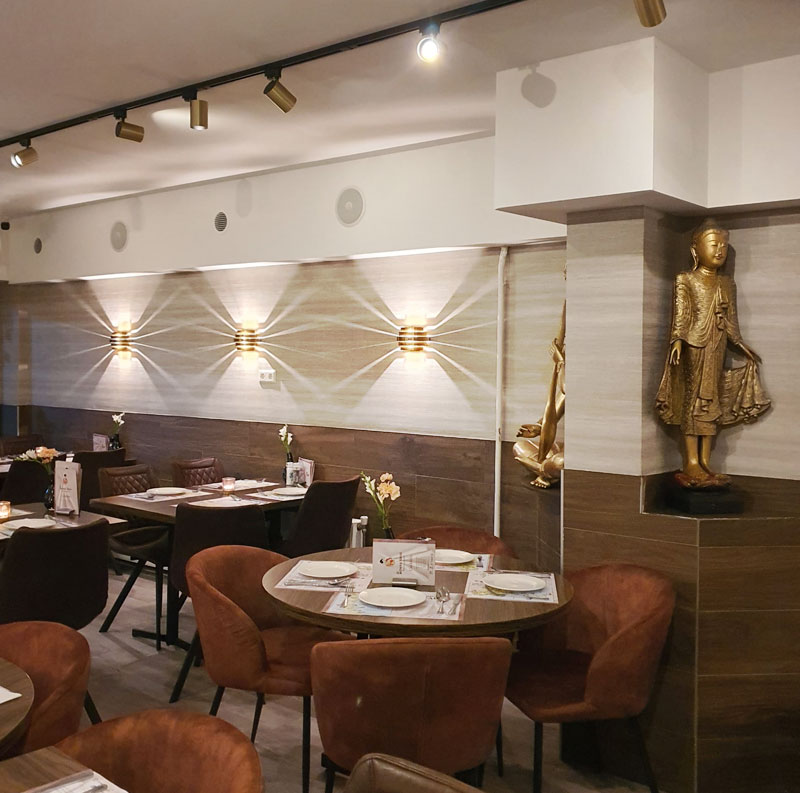
Nestled at Lange Leidsedwarsstraat 94, near a bevy of canal routes and pedestrian jaunts, Royal Thai Restaurant feels right at home in the current moment. When these types of visitors come in from the water and wind, they usually seek some place that is warm and comforting, an environment that feels composed rather than hurried. And when you sit down at dinner, the impressions of the day get a chance to settle — to convert sight into thought.
Here, the meal itself is the last chapter in that journey, and the entrée to dinner isn’t a kind of separate thing but part of a seamless day filled with water, walking and quiet discovery.
Water, Walking, and a Well-Earned Meal
The canals of Amsterdam are not still-life scenery or a decorative backdrop. They are working routes — silent conduits that define the way we experience the city on foot. Tracking the water uncovers strata that no one sight can explain: how architecture responds to space, how neighbourhoods flow into each other without obvious barriers, and how life is influenced in a thousand ways by infrastructure built centuries ago. Every canal stretch provides more context, so the experience becomes one of gradual understanding instead of sight-checking.
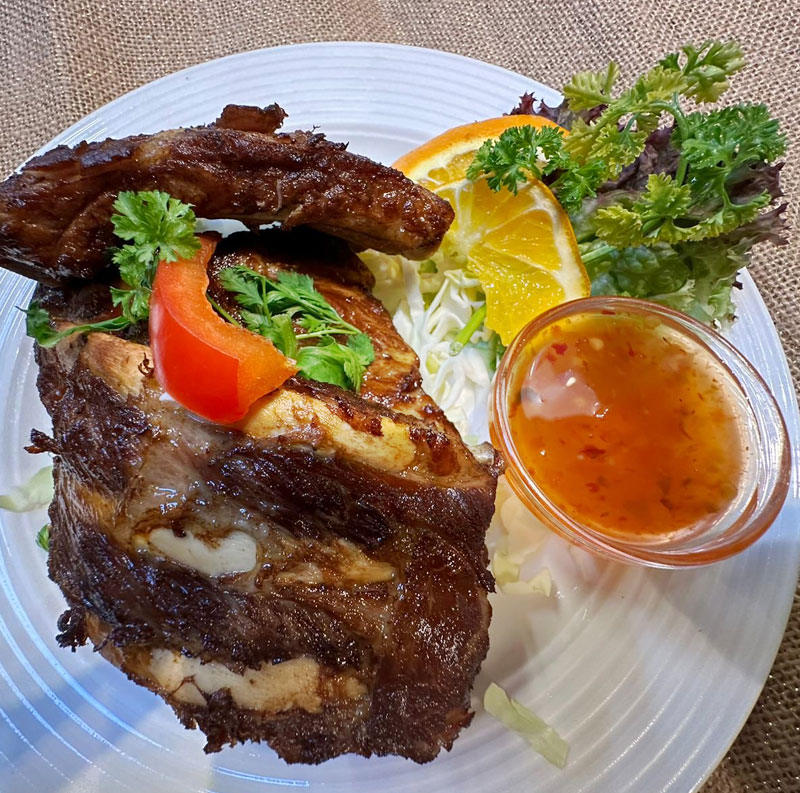
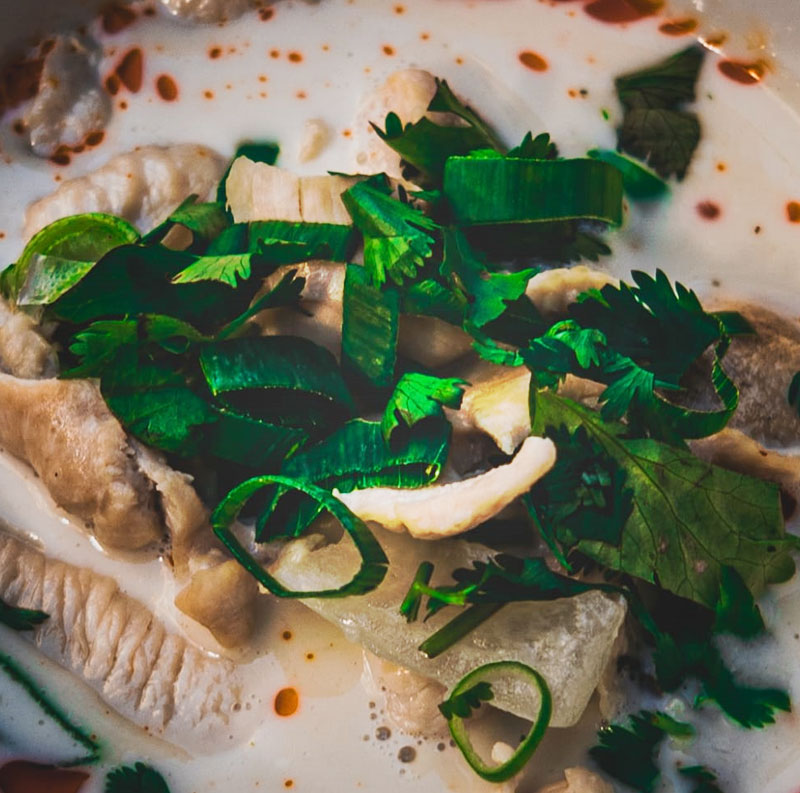
After hours of moving at the speed of a human infantryman — traversing bridges, slowing at railings, soaking in the moods and lighting changes — the body craves repose. Perfectly relaxing with a casual dinner to conclude the day follows in the rhythm of the day after completing a canal walk. It allows for time to decelerate, to meditate and to reconnect through conversation. In this phase, I do not choose a place to eat so much as it occurs to me where we should go — in Royal Thai Restaurant, you have a restaurant where quiet flavours and sedate pacing play to the serenity of canals.
Amsterdam does not reward urgency. Its best experiences take time to unfold, shaped by flow more than schedule. The canals flow lazily, and the city flows along with them. Eating there, at the end of a day formed by water, is not an endpoint but a continuation — another way to tap into how the city breathes.
To follow the water is to understand the structure and spirit of Amsterdam. To end that journey at the table is to know why the city resides in memory long after the walk has concluded.
Recent Post
-
1

-
2
 A Perfect Day Around Amsterdam’s Central Hotels and City Sights
February 10, 2026
-
3
 A Scenic Canal Route Through Amsterdam Followed by Dinner
February 10, 2026
-
4
 Amsterdam’s Cultural Landmarks and the Ideal Way to End the Day
February 10, 2026
-
5

-
6

-
7
 Drop By Our Authentic Thai Restaurant in Leidseplein
June 13, 2024
-
8
 Explore Leidseplein Top Attractions and Famous Places to Visit
December 26, 2025
-
9
 Exploring Amsterdam’s Parks and Ending the Day with Great Food
February 9, 2026
-
10

-
11
 Lange Leidsedwarsstraat: A Complete Guide to Amsterdam’s Lively Streets
February 26, 2026
-
12

-
13
 Shopping Amsterdam’s Iconic Streets Before a Relaxed Dinner
February 9, 2026
-
14
 Strolling Through Amsterdam’s Squares and the Ideal Evening Meal
February 10, 2026
-
15
 Taste The Flavorsome Thai Rode Curry in Amsterdam
June 13, 2024
-
16

-
17
 Try Authentic Thai Food Amsterdam Only at Royal Thai
June 13, 2024
-
18

-
19
 Walking Amsterdam’s Famous Streets and a Relaxing Evening Meal
February 10, 2026
-
20
 Your Guide to a Good Thai Restaurant in Amsterdam
June 13, 2024
